

Ancient Era
Classical Era
Medieval Era
Renaissance Era
Casa de Contratación
Forbidden City
Great Zimbabwe
Potala Palace
St. Basil's Cathedral
Taj Mahal
Torre de Belém
Venetian Arsenal
Industrial Era
Modern Era
Atomic Era
Projects


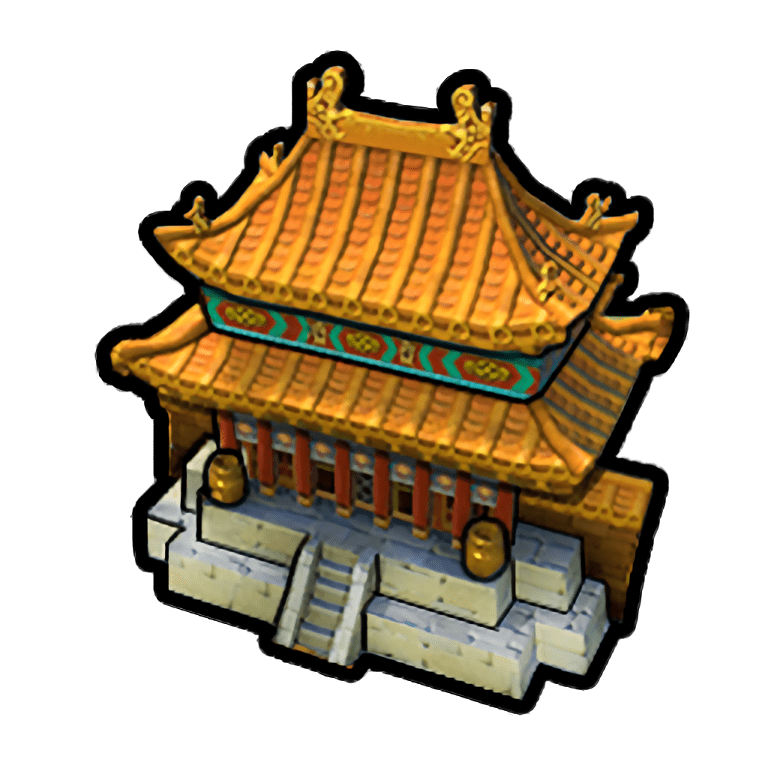
Forbidden City
Description
+1 Wildcard policy slot
Must be built on flat land adjacent to the City Center.
Must be built on flat land adjacent to the City Center.
Historical Context
Lying in the center of Beijing, a visit to Gu Gong (the Imperial Palace of China) was forbidden to the common folk without special dispensation from the emperor himself; hence the complex became known across the land as the “Forbidden City” (much like most presidential residences these days). Construction of the walled “city” – liberally sprinkled with ornamental gardens, graceful terraces, restful fountains and lots of utilitarian administrative offices – began in 1408 AD under the guidance of the Yonglu Emperor, third of the Ming dynasty. The complex grew over the centuries, serving as home to 24 emperors of the Ming and Qing. It grew until it encompassed 9,999 rooms spread over 178 square acres, surrounded by a 170-foot wide moat and 32-foot high walls (just to make sure none of those commoners entered unchecked). At its peak, the Forbidden City was home to ten thousand people, all to serve the needs of one emperor. Now only a few hundred inhabit the sumptuous grounds, to serve as guides and janitors.
“The whole palace complex is built along a central axis, the axis of the world, everything in the four directions suspend from this central point represented by these palaces.”
– Jeffrey Riegel
– Jeffrey Riegel
Traits
Removed if game started after
Modern Era
+5  Culture
Culture+1000  Tourism from Rock Concerts.
Tourism from Rock Concerts.





 Production
Description
+1 Wildcard policy slot
Must be built on flat land adjacent to the City Center.
Must be built on flat land adjacent to the City Center.
Historical Context
Lying in the center of Beijing, a visit to Gu Gong (the Imperial Palace of China) was forbidden to the common folk without special dispensation from the emperor himself; hence the complex became known across the land as the “Forbidden City” (much like most presidential residences these days). Construction of the walled “city” – liberally sprinkled with ornamental gardens, graceful terraces, restful fountains and lots of utilitarian administrative offices – began in 1408 AD under the guidance of the Yonglu Emperor, third of the Ming dynasty. The complex grew over the centuries, serving as home to 24 emperors of the Ming and Qing. It grew until it encompassed 9,999 rooms spread over 178 square acres, surrounded by a 170-foot wide moat and 32-foot high walls (just to make sure none of those commoners entered unchecked). At its peak, the Forbidden City was home to ten thousand people, all to serve the needs of one emperor. Now only a few hundred inhabit the sumptuous grounds, to serve as guides and janitors.
“The whole palace complex is built along a central axis, the axis of the world, everything in the four directions suspend from this central point represented by these palaces.”
– Jeffrey Riegel
– Jeffrey Riegel
Traits
Removed if game started after
Modern Era
+5 Culture
Culture+1000 Tourism from Rock Concerts.
Tourism from Rock Concerts.