Concepts
Civilizations/Leaders
City-States
Districts
Buildings
Wonders and Projects
Units
Unit Promotions
Great People
Technologies
Civics
Governments and Policies
Religions
Terrains and Features
Resources
Improvements and Routes
Governors
Historic Moments

Land Combat

Archer

Artillery

AT Crew

Barbarian Horse Archer

Barbarian Horseman

Berserker

Black Army

Bombard

Carolean

Catapult

Cavalry

Conquistador

Cossack

Courser

Crossbowman

Crouching Tiger

Cuirassier

Digger

Domrey

Eagle Warrior

Field Cannon

Gaesatae

Garde Impériale

Giant Death Robot

Heavy Chariot

Helicopter

Hetairoi

Highlander

Hoplite

Horseman

Hul'che

Huszár

Hwacha

Hypaspist

Immortal

Impi

Infantry

Janissary

Keshig

Khevsur

Knight

Legion

Line Infantry

Llanero

Machine Gun

Malón Raider

Mamluk

Man-At-Arms

Mandekalu Cavalry

Maryannu Chariot Archer

Mechanized Infantry

Modern Armor

Modern AT

Mountie

Musketman

Ngao Mbeba

Nihang

Okihtcitaw

Oromo Cavalry

Pike and Shot

Pikeman

Pítati Archer

Questing Knight

Ranger

Redcoat

Rocket Artillery

Rough Rider

Sabum Kibittum

Saka Horse Archer

Samurai

Scout

Skirmisher

Slinger

Spearman

Spec Ops

Swordsman

Tagma

Tank

Toa

Trebuchet

Vampire

Varu

Voi Chiến

Warak’aq

War-Cart

Warrior

Warrior Monk

Winged Hussar

Zombie

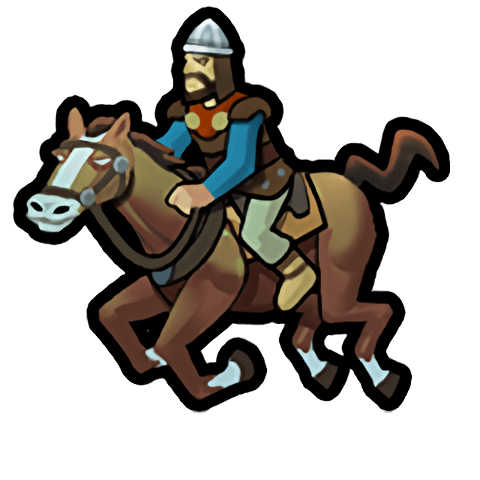
Horseman

Description
Fast-moving Classical era light cavalry unit.
Historical Context
Before the Iron Age, the role of horsemen was largely filled by light chariots, useful both for reconnaissance and in battle. Though occasionally used by commanders and couriers, the horses of the age were too small to carry much weight and were damn expensive. Around 2000 BC, however, those living in the Central Asian steppes domesticated and cultivated larger, stockier, and hardier breeds. Armed with spears, swords and eventually bows, these horsemen generally raised hell … and changed the face of warfare. Soon enough the Greeks to the west and Chinese to the east adapted mounted warriors for their own purposes, then everyone around did as well. But it was the development of the stirrup attached to a sturdy saddle that made horsemen the dominant shock weapon on the battlefield; the earliest saddles with stirrups date from c. 300 AD, and over the next four centuries the innovation spread across Asia and into Europe.
Horseman

Traits

Upgrades To
Promotion Class: Light Cavalry

Requirements

Technology
Production Cost
Base Cost: 80 Production
Base Resource Cost: 20 Horses (on Standard Speed)
Purchase Cost
Base Cost: 320 Gold
Maintenance Cost
Base Cost: 2 Gold
Horseman
Description
Fast-moving Classical era light cavalry unit.
Historical Context
Before the Iron Age, the role of horsemen was largely filled by light chariots, useful both for reconnaissance and in battle. Though occasionally used by commanders and couriers, the horses of the age were too small to carry much weight and were damn expensive. Around 2000 BC, however, those living in the Central Asian steppes domesticated and cultivated larger, stockier, and hardier breeds. Armed with spears, swords and eventually bows, these horsemen generally raised hell … and changed the face of warfare. Soon enough the Greeks to the west and Chinese to the east adapted mounted warriors for their own purposes, then everyone around did as well. But it was the development of the stirrup attached to a sturdy saddle that made horsemen the dominant shock weapon on the battlefield; the earliest saddles with stirrups date from c. 300 AD, and over the next four centuries the innovation spread across Asia and into Europe.

Traits

Upgrades To
Promotion Class: Light Cavalry

Requirements

Technology
Production Cost
Base Cost: 80 Production
Base Resource Cost: 20 Horses (on Standard Speed)
Purchase Cost
Base Cost: 320 Gold
Maintenance Cost
Base Cost: 2 Gold
Language
Choose Ruleset
Download the App
Get it on App Store
Get it on Google Play