

Aerodrome
Campus
City Center
Commercial Hub
Dam
Diplomatic Quarter
Encampment
Entertainment Complex
Government Plaza
Harbor
Holy Site
Cathedral
Dar-e Mehr
Gurdwara
Meeting House
Mosque
Pagoda
Prasat
Shrine
Stave Church
Stupa
Synagogue
Temple
Wat
Industrial Zone
Neighborhood
Preserve
Theater Square
Water Park


Synagogue
Historical Context
Traditionally, the term synagogue (Greek for “assembly”) is used to describe all Jewish temples and is a place both of worship and of study. Worship and prayer take place in the main room, the sanctuary. The prayer may be led by a rabbi (“teacher”) – but not necessarily, and many synagogues do not have a rabbi in attendance. Communal worship can occur whenever a 'minyan' (ten Jews) convenes. Although synagogues existed before the destruction of the Second Temple in Jerusalem in 70 AD, one of its rabbis – Yohanan ben Zakkai – promoted the idea of establishing individual houses of worship wherever the scattered Jews might find themselves. Thus, ever since, any individual Jew (king, wealthy patron, scholar, etc.) or group of Jews (Sephardic, Hasidic, Karaite, Orthodox, Reform, etc.) can found a synagogue.
 Faith
Faith Citizen slot
 +1
+1 
 Production
Historical Context
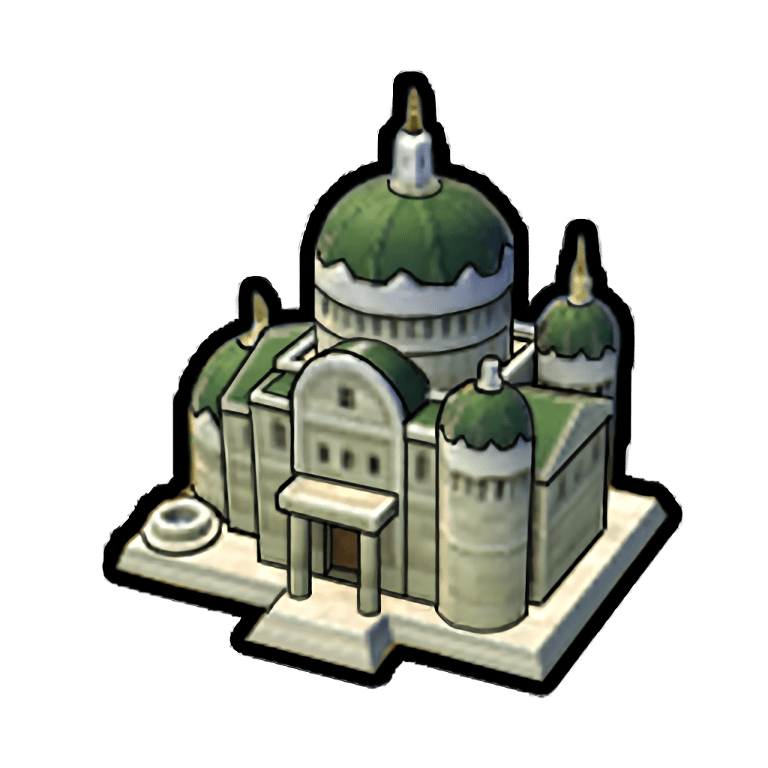
Traditionally, the term synagogue (Greek for “assembly”) is used to describe all Jewish temples and is a place both of worship and of study. Worship and prayer take place in the main room, the sanctuary. The prayer may be led by a rabbi (“teacher”) – but not necessarily, and many synagogues do not have a rabbi in attendance. Communal worship can occur whenever a 'minyan' (ten Jews) convenes. Although synagogues existed before the destruction of the Second Temple in Jerusalem in 70 AD, one of its rabbis – Yohanan ben Zakkai – promoted the idea of establishing individual houses of worship wherever the scattered Jews might find themselves. Thus, ever since, any individual Jew (king, wealthy patron, scholar, etc.) or group of Jews (Sephardic, Hasidic, Karaite, Orthodox, Reform, etc.) can found a synagogue.