

Aerodrome
Campus
City Center
Commercial Hub
Dam
Diplomatic Quarter
Encampment
Entertainment Complex
Government Plaza
Harbor
Holy Site
Cathedral
Dar-e Mehr
Gurdwara
Meeting House
Mosque
Pagoda
Prasat
Shrine
Stave Church
Stupa
Synagogue
Temple
Wat
Industrial Zone
Neighborhood
Preserve
Theater Square
Water Park


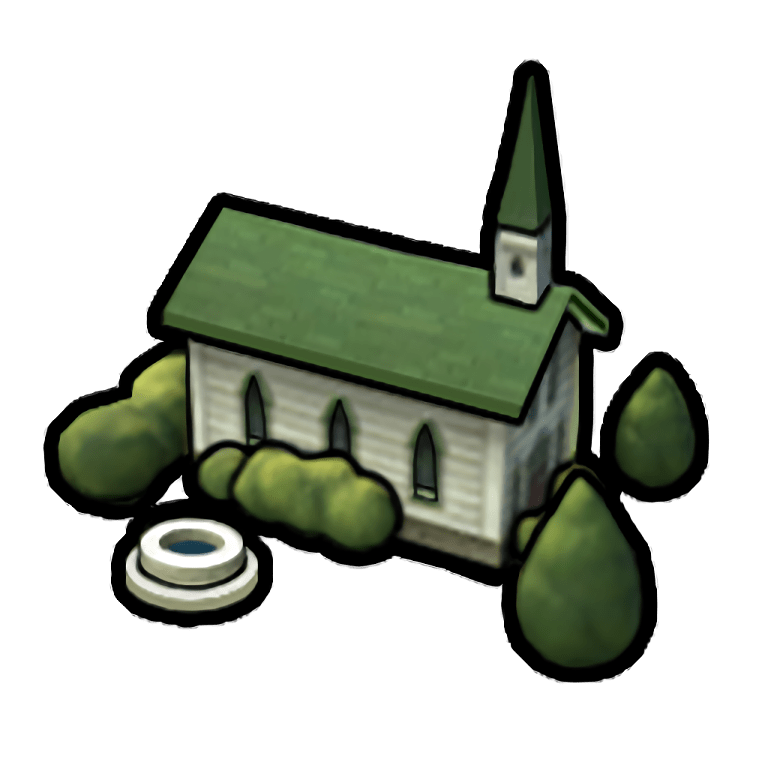
Meeting House
Historical Context
In opposition to the magnificent cathedrals and churches of the Catholic Church, the Protestants thought worship should be serious and undistracted by art. Hence some Congregationalists worshipped in meeting houses - plain, unadorned buildings built from local resources (usually wood and stone). In the New World, the social and cultural center for most of the Protestant colonies was the meeting house, which served as both a place of worship and of public discourse for the settlers. For many early Quaker, Mennonite, Unitarian, Puritan, Baptist and other pious types, the meeting house also served as the de facto town hall, where political debates, votes and decisions were conducted. All along the Atlantic coast colonies, the first public building to go up was typically the meeting house. Once the separation of church and state became a widespread principal in the new United States, those meeting houses were all converted into town halls.
Traits
Unique To
+3  Faith
Faith
Faith+2  Production
Production+1  Citizen slot
Citizen slotCitizen Yields (per citizen)
 +1 Faith
Historical Context
In opposition to the magnificent cathedrals and churches of the Catholic Church, the Protestants thought worship should be serious and undistracted by art. Hence some Congregationalists worshipped in meeting houses - plain, unadorned buildings built from local resources (usually wood and stone). In the New World, the social and cultural center for most of the Protestant colonies was the meeting house, which served as both a place of worship and of public discourse for the settlers. For many early Quaker, Mennonite, Unitarian, Puritan, Baptist and other pious types, the meeting house also served as the de facto town hall, where political debates, votes and decisions were conducted. All along the Atlantic coast colonies, the first public building to go up was typically the meeting house. Once the separation of church and state became a widespread principal in the new United States, those meeting houses were all converted into town halls.
Traits
Unique To
+3 Faith
Faith+2 Production
Production+1 Citizen slot
Citizen slotCitizen Yields (per citizen)
+1 Faith